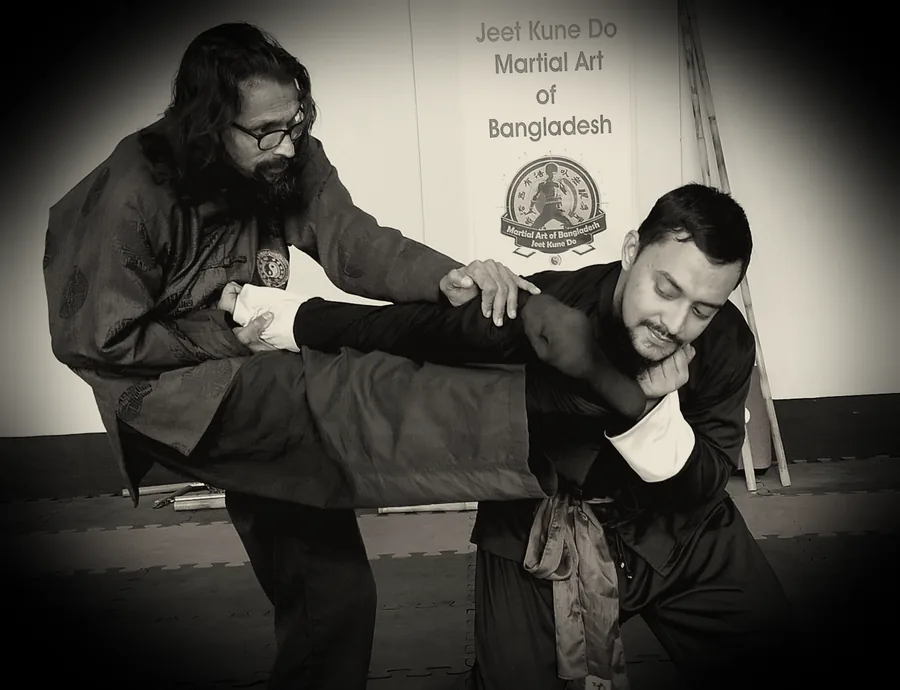
Self-defence training should make you more aware, more prepared, and more able to make choices under pressure. It should not blame you for violence, promise that you will never be targeted, or turn fear into a marketing campaign.
This guide is for women in Dhaka who are considering a class and want to ask better questions before joining.
Start with your goal
Do you want practical self-defence, fitness, confidence, a martial art, or a combination? A good class can support more than one goal, but it should be honest about its focus. Ask what a beginner actually learns in the first month.
The training environment
You should feel safe enough to ask questions, take a break, and say no to an exercise. Ask how the school handles boundaries, privacy, and instructor conduct. A serious school will have a clear answer, not a defensive one.
JKDBD’s published information states that training is open to women and men. It is not a women-only programme. If a women-only environment is important to you, ask directly rather than assuming.
Contact and boundaries
Partner work can be valuable, but contact should be explained, consented to, and scaled. Ask whether you can observe first, whether you can opt out of a drill, and how a tap-out or stop signal works.
No one should be mocked for setting a boundary. A good instructor corrects the behaviour, not the person who raised it.
What the training should include
- Awareness of space, exits, and body language.
- Voice, posture, and distance before physical contact.
- Simple responses that are easy to recall under stress.
- De-escalation and the judgment to leave.
- Honest discussion of legal and ethical limits.
These skills do not guarantee safety. They can improve your options. Be cautious of any class that claims otherwise.
Questions to ask
- What does a beginner learn in the first month?
- How is contact introduced, and can I opt out?
- Who supervises partner work?
- What is the policy on boundaries and instructor conduct?
- Is the environment mixed or women-only?
- What are the fees, and what do they include?
Quick questions
Is JKDBD a women-only class?
No. Published information says training is open to women and men. Ask the team about the current training environment if that matters to you.
Can self-defence training guarantee my safety?
No. No responsible programme can guarantee safety. Good training can improve awareness, options, and confidence, but it cannot control every situation.
Discussion
Comments (0)
Comments are public. Please keep personal information out of the thread.
Loading comments…