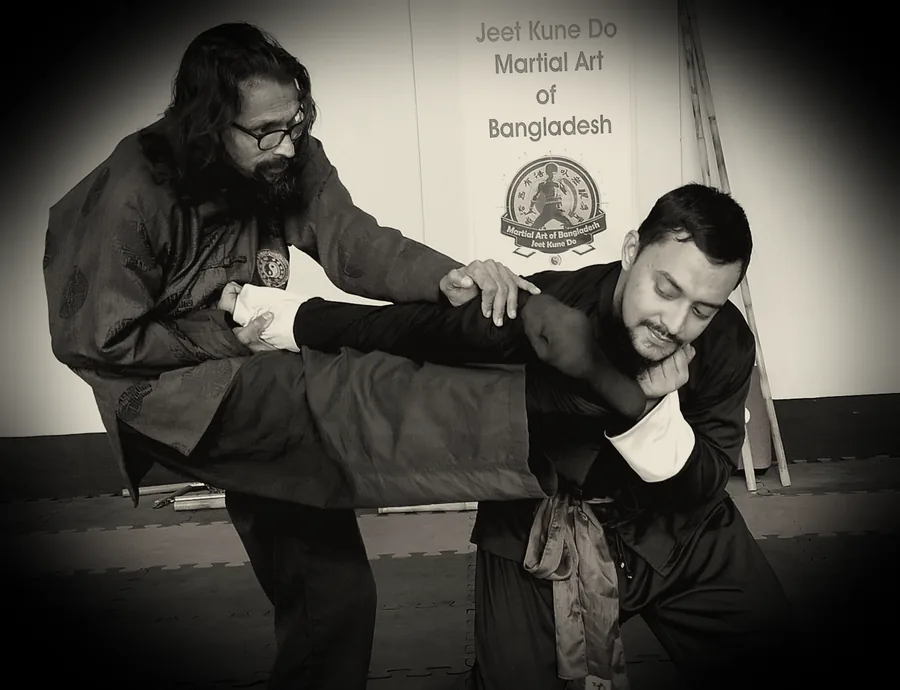
A self-defence class should make you more aware, more difficult to surprise, and more able to leave a situation. It should not promise that you will win every fight, and it should not confuse aggression with skill.
Dhaka has many options, from martial arts schools to short courses. This guide gives you a practical filter for choosing one — especially if you are a beginner.
What a good class should teach
- Awareness: reading space, exits, body language, and the difference between a bad mood and a real threat.
- Boundaries: using voice, posture, and distance before anyone touches you.
- De-escalation: recognising when leaving, apologising, or calling for help is the strongest response.
- Simple physical responses: a small set of movements that are easy to remember under stress.
- Judgment: understanding legal and ethical limits, and when force is not justified.
Techniques matter, but judgment matters more. A class that teaches only strikes without context is not a complete self-defence class.
Contact and consent
Partner work is useful. It teaches distance and timing in a way that solo practice cannot. But contact should be introduced carefully, with clear rules for tapping out, stopping, and saying no.
A beginner should not be thrown into uncontrolled sparring on day one. Ask how the school scales intensity, what protective equipment is used, and whether you can observe or sit out a drill. Those answers tell you more than a dramatic demonstration.
Red flags
- Guarantees that you will be “unbeatable” or “never afraid again.”
- Secret techniques that cannot be explained or tested.
- Pressure to spar before you understand the basics.
- No clear policy on injuries, boundaries, or instructor conduct.
- Mocking students for asking questions or moving slowly.
Confidence is not the same as arrogance. A good instructor can be direct without humiliating people.
Questions to ask
- What does a beginner actually learn in the first month?
- How is contact introduced, and can I opt out?
- Do you teach de-escalation and awareness, or only physical techniques?
- What are the fees, and what do they include?
- Who supervises partner work?
- What is your policy on injuries and medical conditions?
- Can I observe a class before joining?
Choosing in Dhaka
Location matters. A class you can reach consistently is more useful than a perfect class across the city that you attend twice. JKDBD trains in Hazaribagh on Thursday and Friday, 4–6 PM. Our practical self-defence track focuses on awareness, distance, simple responses, and controlled partner work.
We do not promise that training makes you safe in every situation. No school can. We do promise to explain what we teach, how we test it, and where our limits are.
Quick questions
Is a martial art the same as self-defence?
Not automatically. A martial art can support self-defence, but a complete class should also address awareness, de-escalation, legal limits, and the reality of unfamiliar situations.
Do I need to be fit to start?
No. A good beginner class scales the work. If you have a medical condition or injury, speak to a qualified professional and tell the instructor before training.
Discussion
Comments (0)
Comments are public. Please keep personal information out of the thread.
Loading comments…