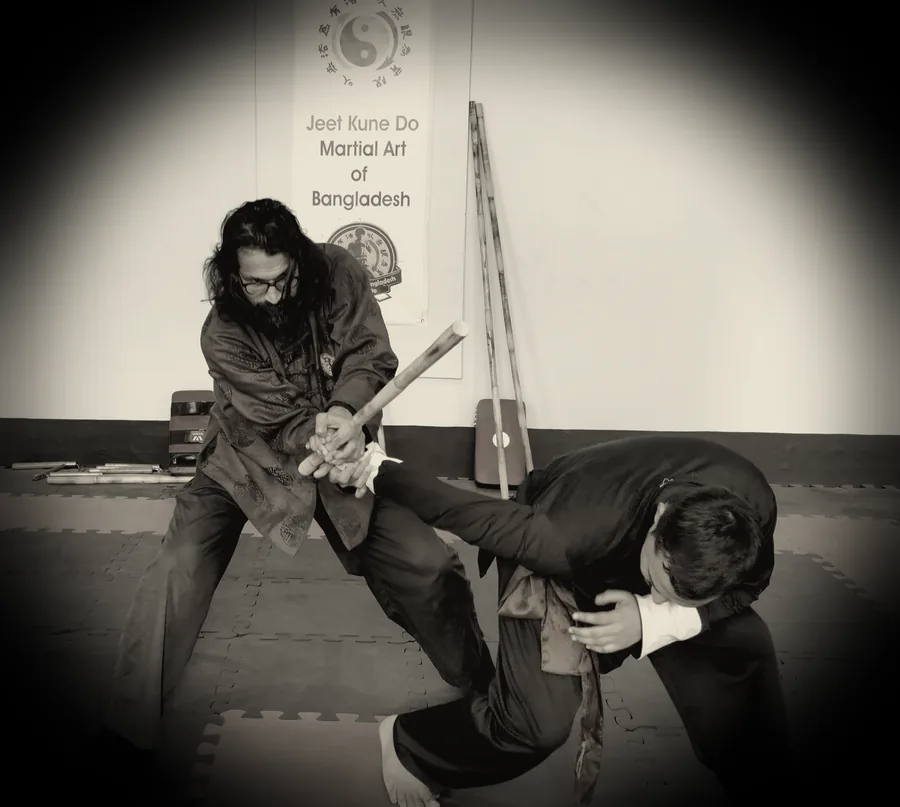
Martial arts can make you fitter. That is not the same as saying it is only a workout. The fitness comes from learning to move, coordinate, and solve problems under light pressure.
If your only goal is to burn calories, a gym or a running plan may be more efficient. If you want fitness attached to a skill, martial arts can be a strong option.
Different from a gym workout
A gym session often isolates muscles and repeats a fixed movement. A martial arts class asks you to move your whole body, react to another person, and stay balanced while your heart rate rises. That is less predictable and more skill-dependent.
It also means the work is not measured only in repetitions. A good session can be demanding without turning every class into a fatigue test.
What it builds
- Conditioning: repeated movement, footwork, and controlled drills.
- Coordination: hands, feet, distance, and timing working together.
- Mobility and balance: moving through stances and changes of direction.
- Composure: staying useful when someone is moving toward you.
These are general training effects, not medical promises. Individual results depend on your starting point, consistency, and recovery.
Starting as a beginner
You do not need to be fit before you start. A sensible class scales the warm-up, the number of repetitions, and the complexity of the drills. Tell the instructor if you have an injury or a medical condition.
Do not compare your first week to someone else's third year. Learn the shapes, breathe, and return. Fitness will follow if the training is consistent and sensible.
Recovery matters
More training is not always better. Sleep, food, water, and rest days are part of the programme. Sharp pain is not a badge of effort; it is a reason to stop and seek appropriate advice.
Training in Dhaka
JKDBD trains in Hazaribagh on Thursday and Friday, 4–6 PM. The work is martial arts first, fitness second. If you want a structured place to start, see the training tracks or send a message.
Quick questions
Will martial arts help me lose weight?
It can contribute to fitness and energy expenditure, but no responsible school should guarantee weight loss. Nutrition, sleep, medical factors, and consistency all matter.
Can I train if I am not fit?
Yes, with appropriate scaling. Tell the instructor about injuries or medical conditions and build gradually.
Discussion
Comments (0)
Comments are public. Please keep personal information out of the thread.
Loading comments…