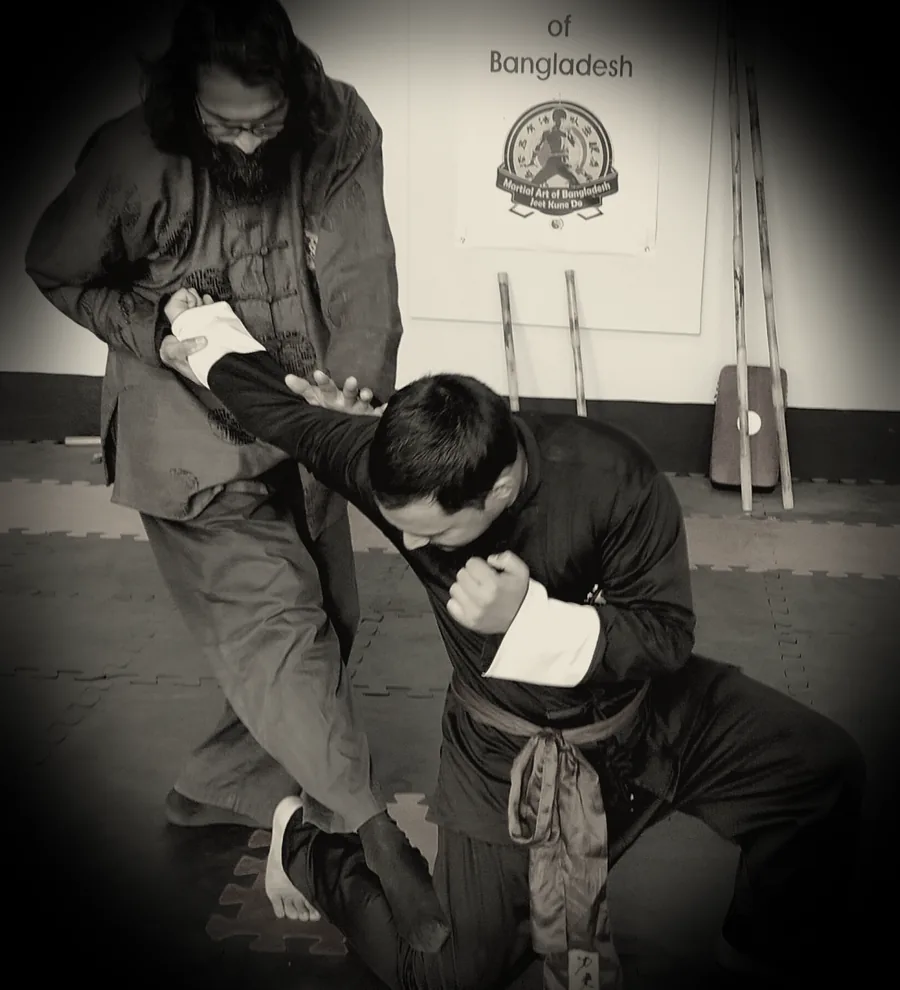
Your first martial arts class is not an audition. You are not expected to arrive fit, flexible, or fearless. A good beginner session should meet you where you are and explain what is happening.
This is a practical picture of a first class in Dhaka — not a promise of exactly what every school does, but a standard you can use to judge one.
Before you go
Confirm the time and location. Bring comfortable training clothes, water, and a towel. If you have gloves, wraps, or training shoes, ask whether they are needed. Arrive a few minutes early so you are not rushing into a warm-up.
Tell the instructor about any injury, medical condition, or movement limitation before the session begins. You do not need to share private details with the whole room; a quiet word is enough.
What happens in class
A sensible beginner session usually includes a warm-up, a simple stance and guard, footwork, one or two basic strikes, and a controlled partner drill. The instructor should explain the purpose of the drill, demonstrate it, and give you a chance to ask questions.
You may work with a more experienced student. That is normal, provided the drill is controlled and the senior student is helping rather than treating you as a punching bag. You should hear corrections more than once; repetition is the point.
What should not happen
- Hard sparring before you understand basic movement and safety.
- Being left alone to copy the room without explanation.
- Being mocked for asking a question or moving slowly.
- Being pushed into contact you did not agree to.
- Being promised a black belt timeline or guaranteed self-defence.
After class
You may feel uncoordinated. That is normal. You may be a little sore the next day. That is also normal, provided it is general soreness rather than sharp pain.
Ask one or two questions before you leave: what should I practise before the next session, and what should I bring? A school that gives you a clear next step is usually a school that takes beginners seriously.
How to decide
Do not judge the class only by how exciting it looked. Judge it by whether you understood what you were doing, whether the instructor corrected you, and whether you felt safe enough to return. Consistency will teach you more than a dramatic first day.
JKDBD trains in Hazaribagh on Thursday and Friday, 4–6 PM. If you are considering a first session, send a message and confirm the current schedule and starting point. You can also read the full beginner guide.
Quick questions
What should I wear to my first class?
Comfortable clothes you can move in, plus water. Ask the school whether training shoes, gloves, or wraps are required before you travel.
Will I have to spar on the first day?
You should not be forced into hard sparring on day one. Ask how contact is introduced and whether you can observe or opt out.
Discussion
Comments (0)
Comments are public. Please keep personal information out of the thread.
Loading comments…